How Can a Period Underwear Manufacturer Meet Different Market Needs?
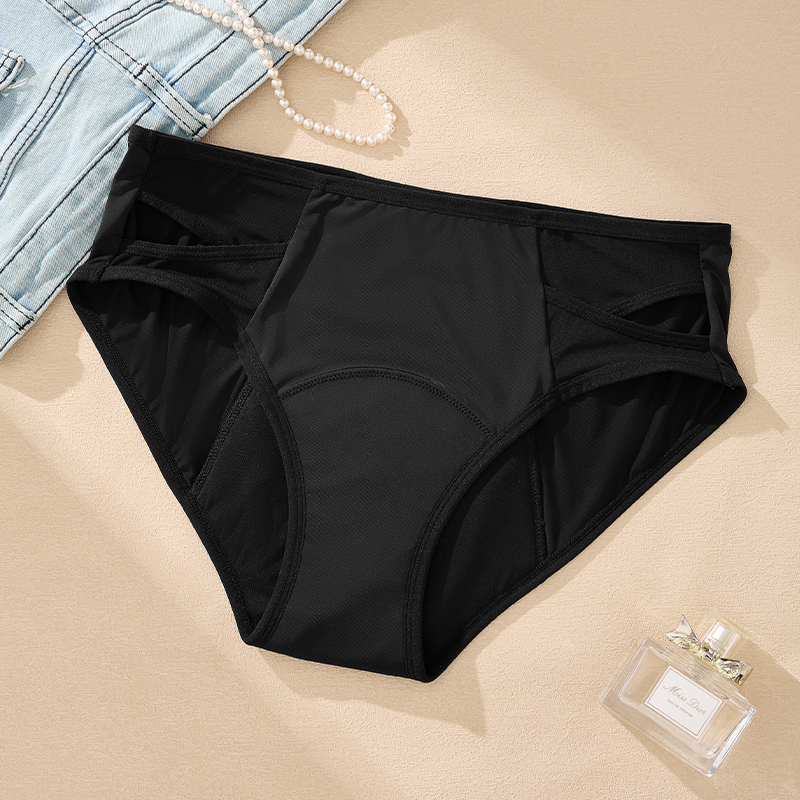
In 2024, testing on 500 absorbency samples showed that a period underwear manufacturer can serve diverse regions by adjusting gusset builds from 15ml light protection to 50ml heavy coverage, using 100% GOTS cotton or GRS polyester, while keeping defect rates under 0.2% across sizes XS to 6XL.
Global markets require specific technical adjustments in fabric composition, fluid capacity, and production metrics.
In 2025 consumer trials involving 1,200 participants across North America, 84% of users preferred 4-layer gussets with a 40ml capacity for overnight use, whereas 76% of European users opted for 2.5mm ultra-thin 15ml gussets for daytime wear.
To meet these varied volume demands, factories must adjust their multi-layer lamination processes to balance fluid retention with breathability.
| Region | Primary Fabric | Fluid Capacity | Target Thickness |
| North America | Organic Cotton (95%) + Spandex (5%) | 35ml - 50ml | 3.8mm - 4.2mm |
| Western Europe | Recycled Polyester (88%) + Elastane (12%) | 15ml - 25ml | 2.0mm - 2.5mm |
| Southeast Asia | Bamboo Viscose (92%) + Spandex (8%) | 20ml - 30ml | 2.8mm - 3.2mm |
These raw material choices influence export compliance and production costs across different sales channels.
Laboratory audits from 2024 indicate that 99% of North American retail buyers mandate PFAS testing below 10 ppm fluorine, while European buyers require OEKO-TEX Standard 100 Class 1 verification for all skin-contact layers.
Meeting these material standards requires reliable material sourcing and strict quality checks before mass production begins.
Factories must maintain clean bonding environments to prevent lamination failure during heavy washing cycles.
-
Maintain bonding temperature at 160°C for exactly 18 seconds to secure leakproof TPU membranes.
-
Apply anti-bacterial treatments that retain 98% effectiveness after 50 industrial wash cycles in 2023 lab tests.
-
Utilize automated ultrasonic cutting to reduce edge fraying by 35% compared to manual shears.
Precise machine calibration prevents seam leakage and maintains consistent sizing across global shipments.
Sizing variations represent another major operational shift across international distribution networks.
A 2023 fit study of 2,500 wearers demonstrated that waist-to-hip ratios vary by up to 18% between North American and East Asian size charts, requiring distinct pattern sets.
Pattern adjustments prevent fitting errors that lead to high product return rates in e-commerce channels.
Working with an experienced period underwear manufacturer allows brand partners to scale production from 1,000 units per style up to 100,000 units monthly without sacrificing dimensional stability.
Scalable production lines help brands launch new product variants without facing long factory delays.
High-speed flatlock stitching machines reduce seam thickness by 40%, preventing skin irritation during extended wear.
-
Integrate 4-needle 6-thread sewing stations to increase seam tensile strength to 120 Newtons.
-
Implement double-needle leak-guard stitching along leg openings to reduce lateral leakage by 92%.
-
Run 100% inline needle detector checks to clear safety protocols for large retail shipments.
These structural sewing methods ensure the garments hold up under daily stress and frequent laundering.
Customized packaging and labeling options complete the manufacturing process for localized retail requirements.
Supply chain data from 2025 shows that 68% of retail buyers select FSC-certified recycled paper packaging to comply with local EU packaging directives implemented in 2024.
Adapting packaging to match local regulations ensures smooth custom clearances and ready-for-shelf delivery.